
Loading
Steel
Fimex is a steel castings supplier and foundry with 61 years engineering castings for the most demanding industries, and a nearshoring partner serving the United States, Canada, and Mexico with USMCA-compliant supply. Carbon, low-alloy, stainless, refractory and custom steel alloys, all cast and CNC-machined under one roof.
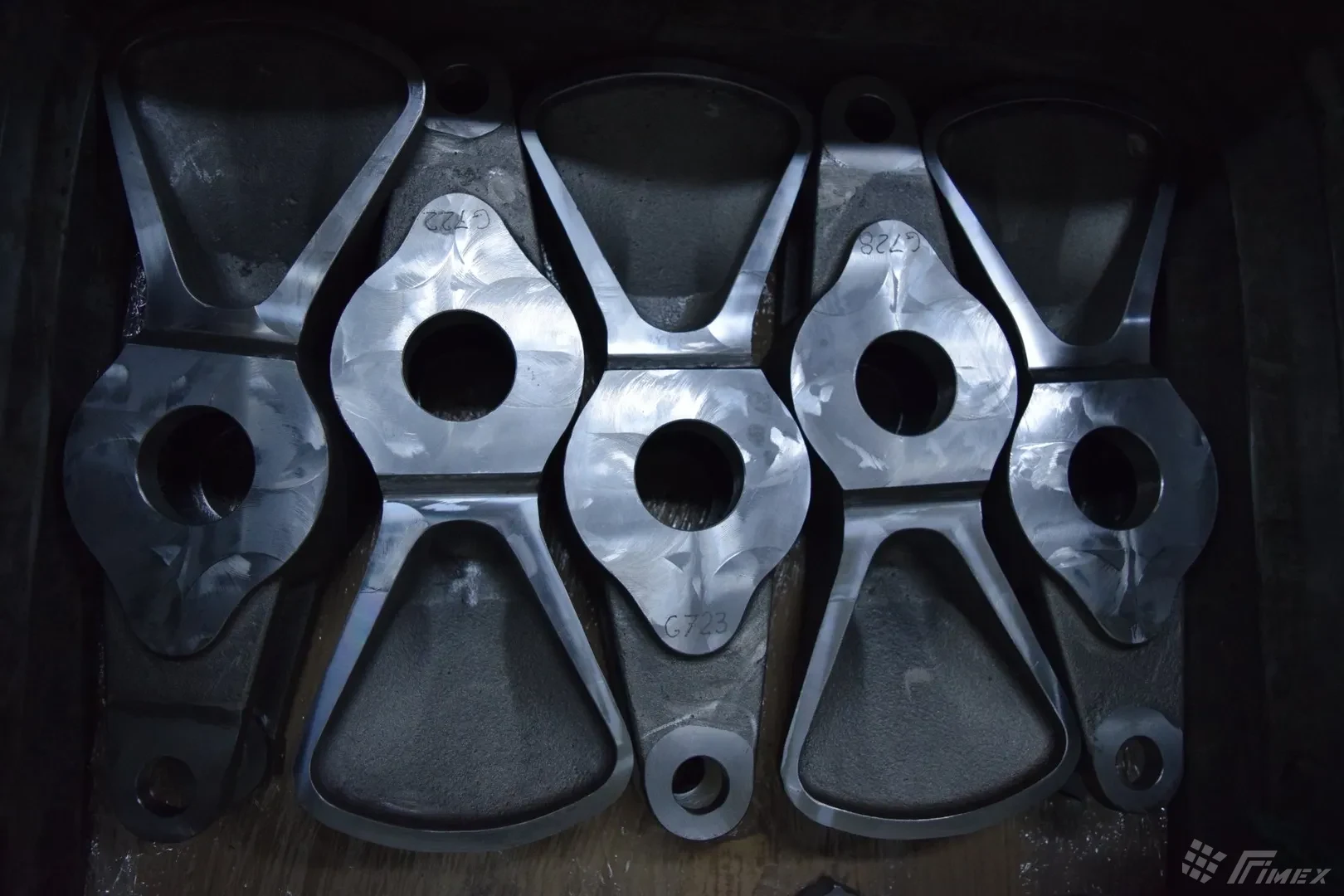
Typical parts include valve bodies, pump housings, impellers, gears, brackets, and wear-resistant components.
Casting Weight Range
Supplied as-cast or fully CNC-machined
Materials
Carbon Steels
Valve bodies, pump casings, gas meters, structural brackets and pressure-containing parts.
Low Alloy Steels
High-temperature valves and pumps, refinery and petrochemical components, mining and oil & gas shafts.
Martensitic Stainless Steels
Hydraulic turbines, high-pressure valves, pump impellers and wear-resistant components.
Austenitic Stainless Steels
Cast equivalents of 304, 304L, 316, and 316L: chemical and food-processing service.
Refractory Steels
Heat-resistant grades for cement kilns, hydrogen reformers and furnace internals.
Custom Steel Alloys
Proprietary and customer-specified compositions for unique performance requirements. Each request is reviewed and validated by our engineering team before quoting.
Typical Industries
Manufacturing Process
The client provides the product design. Fimex engineers how to cast it with in-house CAD/CAM using SolidWorks, PowerSHAPE, and PowerMill for pattern development and mold design. Wood, resin, or metal patterns fabricated to spec. Casting simulation with SolidCast to optimize geometry, predict shrinkage, and minimize defects before production.
Complex cores manufactured using two systems: Hot Box and Cold Box. Ceramic and silica sand cores ensure accurate internal channels and cavities, even for highly intricate geometries.
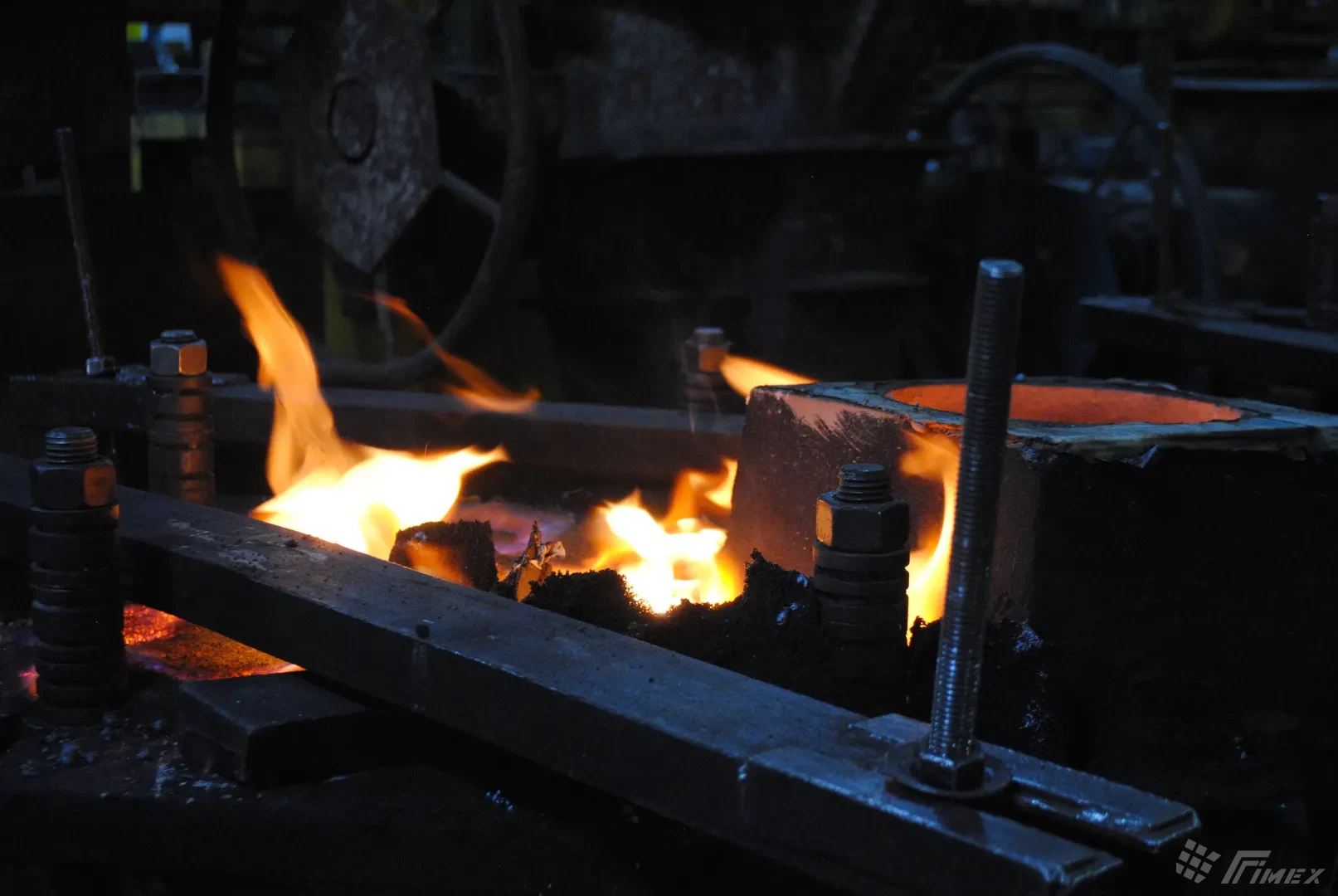
Two cluster molding processes for steel: Lost Foam and No-Bake Sand. Equipped with IMF systems, mixers, and HAST for consistent sand preparation and production efficiency.
Induction furnaces for steel alloys. Chemical analysis per heat ensures precise alloy composition. Controlled pouring temperature and speed for optimal casting integrity and traceability.
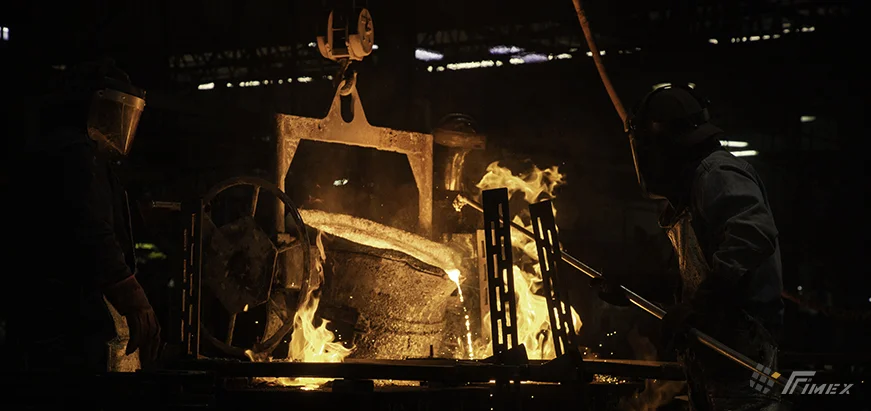
Controlled cooling rates to achieve target microstructure and mechanical properties. Sand separation and reclamation systems minimize waste and ensure sand quality for reuse in subsequent production cycles.
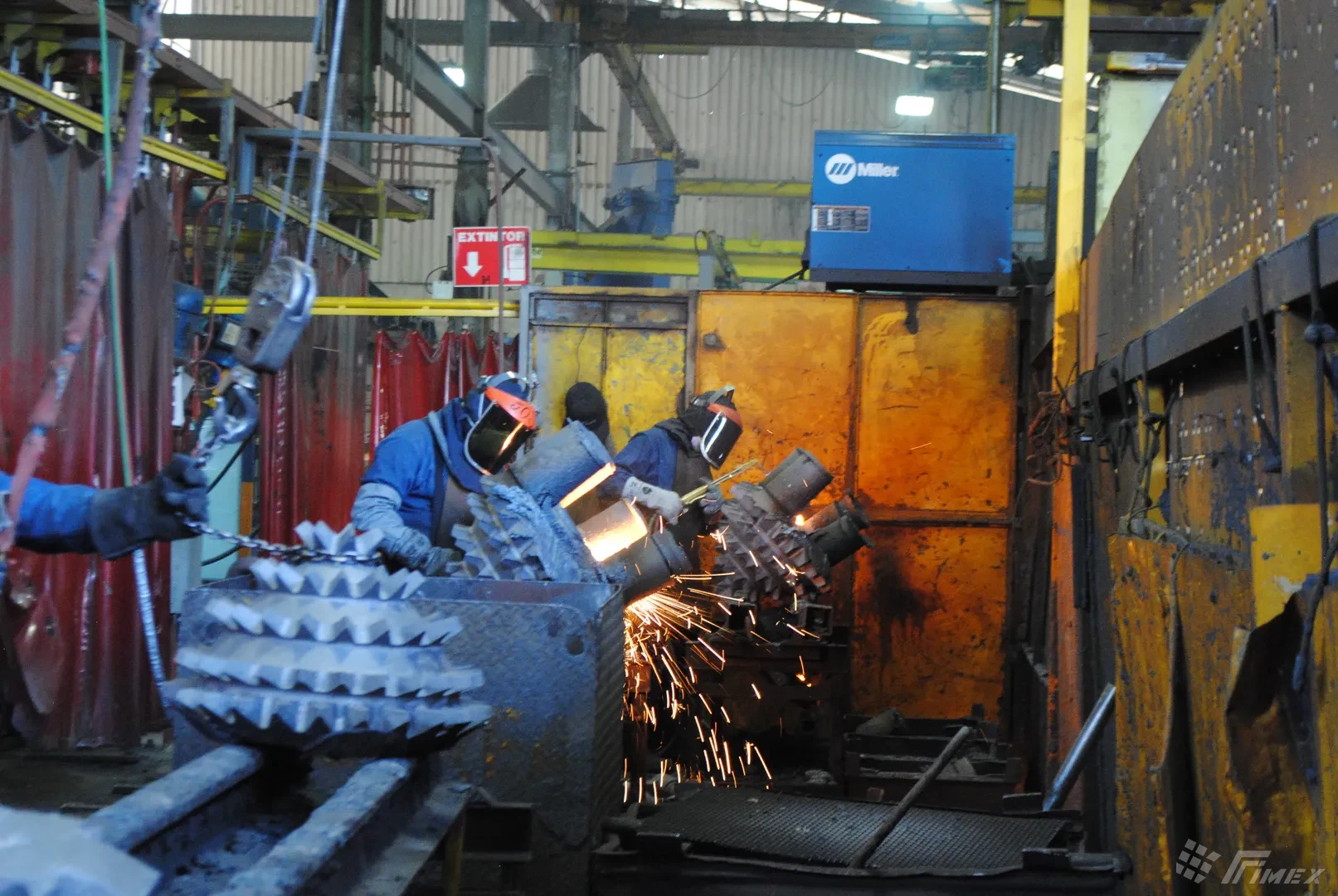
Grinding, shot blasting, and polishing to remove gates, risers, and surface imperfections. Parts inspected before advancing to heat treatment or machining.
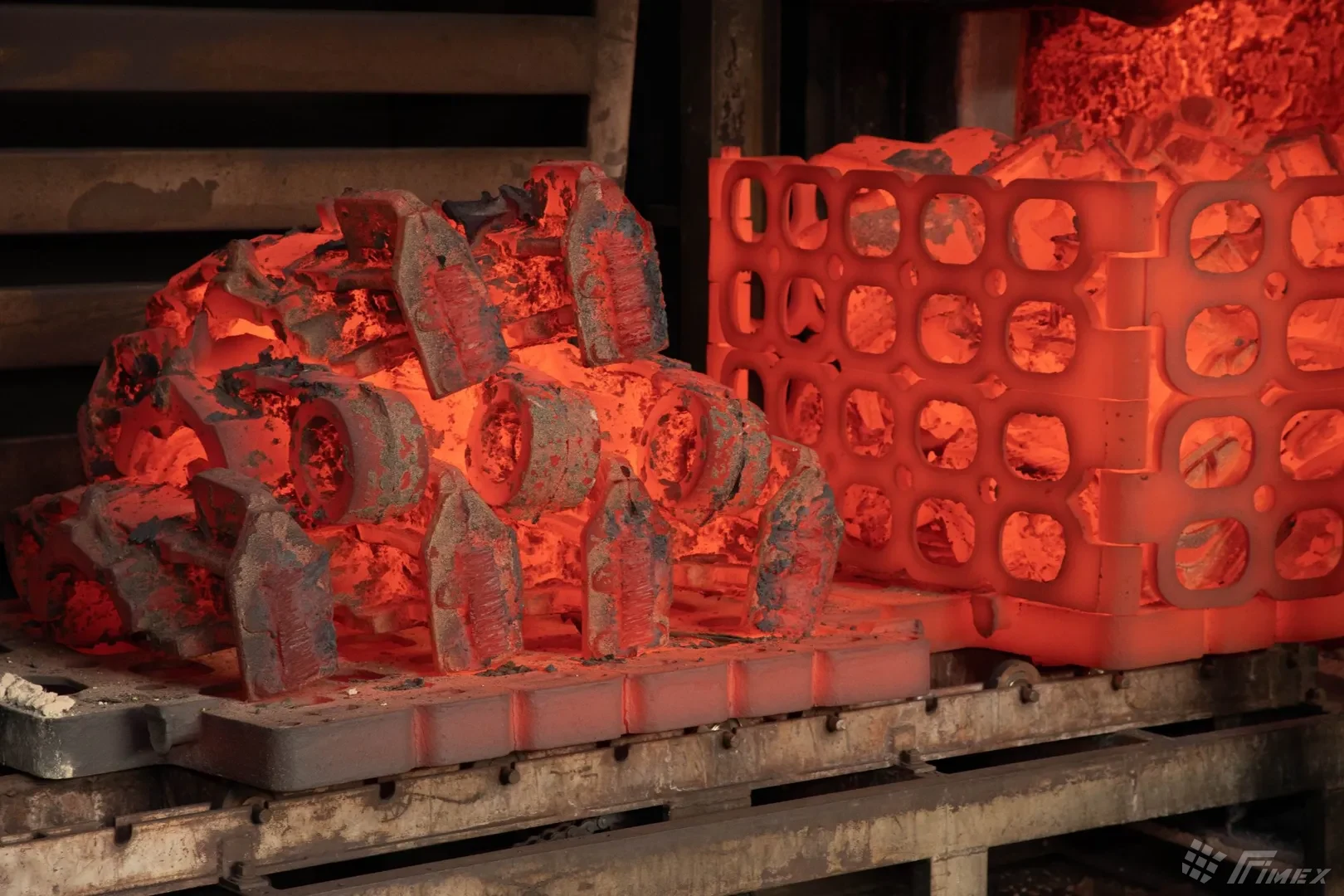
Full heat treatment capabilities: Normalizing, Annealing, Quenching, and Tempering. Controlled furnaces ensure precise microstructure and target mechanical properties for each steel alloy and customer specification.
Dedicated steel machining floor: CNC horizontal & vertical machining centers, lathes, and conventional equipment. Optimized for steel alloy families.
Full dimensional, metallurgical, and NDT inspection per customer specifications. Destructive testing (Charpy impact, tension/tensile, cross-section cuts). Non-destructive: ultrasonic, liquid penetrant, magnetic particle, radiographic, hardness, chemical analysis, dimensional, and visual inspection. 3D scanning for reverse engineering and dimensional verification. Every steel part is verified before shipment.
Process Strengths
Two processes: No-Bake Sand Casting · Lost Foam. The right method selected for each steel alloy, geometry, and volume requirement.
Dedicated steel machining floor: CNC horizontal & vertical machining centers, lathes, and conventional equipment. Purpose-built for steel alloy families.
Normalizing, annealing, quenching, and tempering. Controlled furnaces on site ensure target microstructure and mechanical properties per customer spec.
Technical Questions
Fimex produces cast steel grades validated by Quality across five families: carbon steel (WCB, WCC, LCB, LCC), low-alloy steel (WC6, WC9, Grade 4 Classes A/B/C/D/E, SC 4140, SC 8620, SC 8630 in 4 classes), martensitic stainless (CA15, CA6NM), austenitic stainless (CF3, CF3M, CF8, CF8M), and heat-resistant refractories (HA, HC, HD, HE, HF, HH, HI, HK, HL, HN, HP, HT, HU under ASTM A297 / A608 / A447).
Share your specs with our engineering team. Complex geometry, low-to-medium volume production, or custom alloy.